Comfort Zone: Designing Spaces for Emotional Safety
It’s Monday morning, and your week begins in the faculty workroom. Colleagues arrive, sharing stories of weekend outings. Table feet screech across the floor as furniture is rearranged for collaboration. The light above is bright; the sun shining on your workstation, even brighter. The aroma of someone’s breakfast fills the space. As the room occupancy rises, so does the sensory input—and possibly your emotions.
Too much sensory input can provoke overstimulation. This state of overwhelm can manifest as feeling unsettled or unsafe in the surroundings. Some individuals—often adults—can self-regulate. Students, however, are still learning how to process their environments.
As educators and designers, it is our responsibility to give them tools for learning, and that can start with spaces that support feelings of calm, comfort, and safety—not stress and anxiety.
In addition, as neurodiversity suggests, not all people experience and engage with the world in the same way. In fact, between 15% and 20% of the global population is recognized as neurodivergent, a term describing “people whose brain differences affect how their brain works.” These differences, including additional connections in the brain and reduced cognitive filtering, can make neurodivergent individuals more susceptible to cognitive overload.

Many districts are embracing these ideas with the understanding that most students are still learning to regulate and that no two students process information the same way. Below we highlight built elements designers can implement to create an atmosphere that fosters a psychologically safe environment.
Visual Considerations
Visual elements such as lighting, color, and visibility can be particularly overwhelming sensory inputs. While natural lighting is best to support circadian rhythms, small strategies—like zoned, dimmable LED lighting—can help students manage environmental triggers such as brightness and glare.
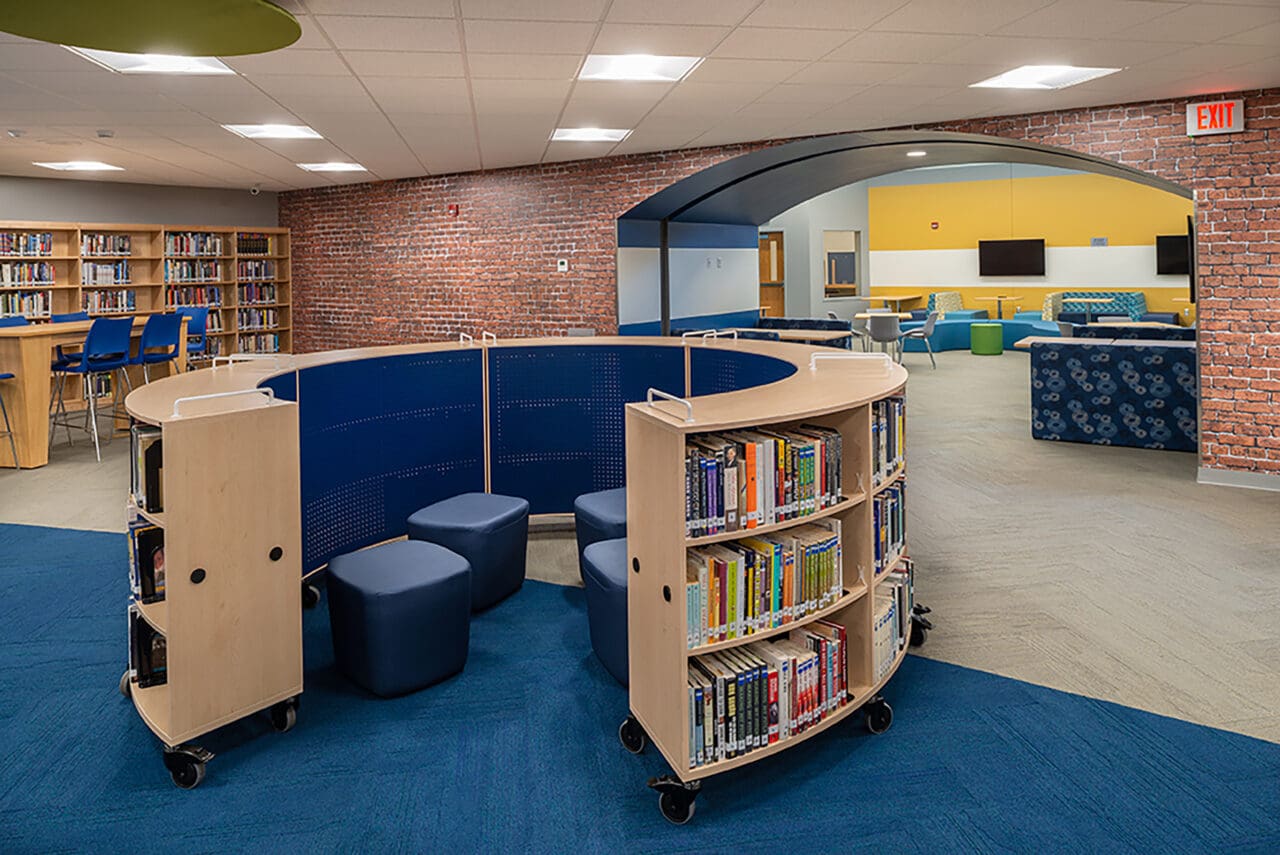
Colors should be used thoughtfully, with calm or neutral palettes supplemented by minimal bold colors. Bright, bold colors can be reserved for distinguishing zones, feature areas, or wayfinding within spaces.
Transparency and visibility between spaces helps students see a space before entering, reducing the discomfort of entering an unfamiliar area.
Tactile, Olfactory, and Auditory Considerations
Incorporating furniture and finishes with soft textures or providing areas of grass-like turf gives students a tactile way to process sensory inputs. Elements like sensory paths, interactive walls, and furniture that students can climb on can also be effective means for expressing kinesthetic energy.
When space planning, areas with strong smells, like cafeterias, should be placed away from classrooms and focus spaces. Similarly, areas with high levels or unique types of noise should be isolated. Even sounds like flushing toilets or elevator machine components humming can create an unpleasant atmosphere.
Designers should also recognize the importance of acoustic-absorbing dividers, acoustic wall systems, and enhanced ceiling and wall finishes to reduce the amount of reverberation and sound transfer between spaces.
Choice and Flexibility
Ultimately, students benefit from increased agency within their classrooms. Much research has gone into the Universal Design for Learning (UDL) guidelines, where a focus on engagement, representation, and action encourages students to flourish.
- Engagement: Giving students opportunities to practice learning in ways that best allow them to cope and challenge themselves.
- Representation: Providing students opportunities to personalize how they build skills.
- Action: Encouraging students to express what they have learned in an authentic manner.
Though vastly based on teaching and classroom management policies, the UDL concepts can apply to the built environment in many ways. Designers should provide adaptable furniture that allows for rocking, wiggling, or standing—a few means of self-regulation. Small areas of refuge, like individual, recessed nooks or separate workrooms, can promote physical and emotional security.
By recognizing that students respond uniquely to their surroundings, we take the first step toward creating emotionally safe learning environments. While some may thrive in lively, dynamic spaces, others need calm and structure to feel secure and focused. When we prioritize comfort and psychological safety, students can engage and grow in the ways that work best for them.