Maximizing Transportation Funding and Expertise: How Municipalities Can Leverage Their Local Metropolitan Planning Organization

Communities across the country face unmet transportation needs. Aging roadways and bridges, traffic safety concerns, incomplete pedestrian and bicycle networks, transit gaps, and mounting climate resilience goals all place increasing pressure on local transportation systems. These challenges collide with a planning and funding process that grows more complex each year, with layered federal, state, and regional requirements governing how projects are planned, evaluated, and ultimately funded. Compounded by a $6 billion federal funding gap for public transit nationwide and a nearly $40 billion annual deficit in the federal Highway Trust Fund, communities are feeling the high stakes of each annual budget.
For local governments, the question isn’t what needs to be funded, but how to navigate this competitive landscape to serve their communities. Even well-conceived local projects can stall if they are not aligned with regional priorities or shifting federal planning requirements. This is where Metropolitan Planning Organizations (MPOs) play a pivotal role. As strategic partners, MPOs serve as the bridge between local needs and regional and federal investment decisions. Understanding how MPOs function and how to engage them effectively can move projects from vision to reality.
MPOs Explained: What They Are, What They Do, and Why They Matter
Federally required for urbanized areas with populations over 50,000, MPOs are regional transportation planning entities that provide a structured forum where policy boards, including elected officials and representatives from member municipalities and agencies, help shape regional transportation priorities.
Through a cooperative, continuous, and comprehensive planning process, MPOs coordinate decision-making, ensure compliance with federal requirements, and use data-driven, performance-based approaches to guide transportation investments. MPOs serve as both a gateway to funding and a technical resource that helps ensure projects are aligned with broader regional and federal priorities, ultimately helping members (municipalities within the MPO boundary) advance projects that are well-positioned for implementation.
MPOs carry out their work through three core documents that are central to how transportation projects advance from planning to implementation.
- The Long-Range Transportation Plan (LRTP) establishes a region’s transportation vision, goals, and investment priorities over a 20- to 25-year horizon and provides the policy framework that guides future decisions.
- The Transportation Improvement Program (TIP) translates those priorities into action by identifying and programming specific projects eligible for federal transportation funding over a multi-year period, making TIP inclusion a critical step for municipalities seeking to advance projects toward construction.
- Supporting these plans is the Unified Planning Work Program (UPWP), which defines the MPO’s near-term planning activities and allocates federal planning funds to specific studies and tasks. For municipalities, inclusion of a planning study in the UPWP can be an important early step to receiving resources and regional support to develop projects that are better positioned for future TIP programming and funding.
Each of these documents is developed within the context of the entire region, balancing the needs of urban, suburban, and exurban communities.
Turning Ideas Into Reality: How to Navigate the MPO Process
Municipalities that strategically engage MPOs early in the planning process can strengthen project justification, access technical resources, and position themselves to compete more effectively for funding while reducing risk and uncertainty later in project development.
Making Projects MPO-Ready
Understanding how MPO planning and programming timelines work together is one of the most effective ways to ensure projects are “MPO-ready.” MPOs operate on defined planning and programming cycles, with the UPWP guiding when planning studies can be initiated and the TIP determining when projects are eligible to move into design and construction. As part of the TIP and UPWP development cycles, MPOs typically issue a formal call for projects or planning studies, inviting municipalities within the MPO boundary to submit projects and planning studies for evaluation. Projects that coincide with the goals, performance measures, and investment priorities established in the LRTP, as well as those with schedules synced to MPO timelines, are more likely to score well during evaluations.
Strengthening Funding and Grant Applications
Alignment with these MPO plans and priorities is increasingly important for municipalities pursuing competitive transportation funding. Projects that are grounded in data, reflected in regional plans, and consistent with established performance measures are better positioned to compete for federal programs such as the Highway Safety Improvement Program, Safe Streets and Roads for All, and Transportation Alternatives Program.
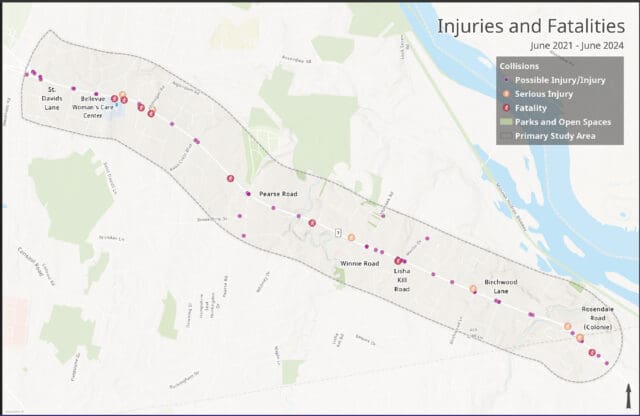
One strong example of successful alignment is the Niskayuna Safe on 7 Complete Streets Plan, an MPO-sponsored corridor study. Collaboration between the regional MPO, Capital Region Transportation Council, and municipal leaders, managed by LaBella Associates, provided the Town of Niskayuna, New York, with a data-driven foundation for safety and multi-modal improvements. This approach positioned the Town to pursue targeted funding opportunities and engage with the New York State Department of Transportation as the roadway owner to advance projects aligned with regional priorities.
From Local Challenges to Regional Solutions
Municipalities often approach their MPOs with a wide range of concerns: a corridor with a history of crashes, a downtown street that feels unsafe for pedestrians, a growing employment area with limited transit access, or a desire to better connect neighborhoods through walking and bicycling networks. MPOs are designed to help communities turn these identified needs into well-defined, data-supported planning efforts that lead to implementable projects. Through technical assistance programs, MPOs provide municipalities with access to tools and expertise that many communities would not otherwise have available.
Municipalities that understand how MPOs operate and actively engage them throughout the planning and project development process achieve better outcomes. Communities that integrate MPO planning early see projects advance more quickly, secure competitive funding, and avoid costly delays. The benefits aren’t just administrative; they’re safer streets, improved mobility, and infrastructure that reflects both local priorities and regional goals. In an era of limited resources and rising expectations, leveraging MPO partnerships is a proven strategy for converting transportation challenges into lasting solutions.
How MPOs Benefit Member Agencies
For municipalities, MPOs provide several critical benefits:
- Access to federal and state transportation funding
- A transparent, data-driven framework for project prioritization
- Regional coordination that strengthens local projects
- Technical expertise and analytical capacity that many municipalities do not have in-house
When leveraged effectively, MPOs can help municipalities turn local needs into regionally supported, fundable projects.