A Replicable Retrofit Model for Electrifying Multifamily Buildings
Electrifying multifamily housing at scale remains one of the toughest challenges in existing building decarbonization. Many apartment buildings across New York rely on centralized gas-fired steam or hot water boiler systems that are difficult to replace without major disruption to residents.
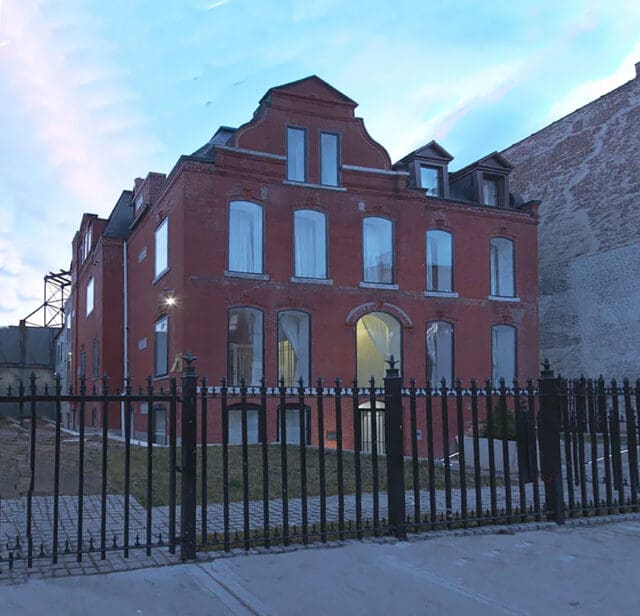
As part of NYSERDA’s Empire Building Challenge (EBC), LaBella Associates partnered with Chartered Properties and Sunamp Optimized Thermal Systems to develop a replicable retrofit model designed to electrify these buildings while allowing construction to occur in phases with minimal disruption to residents and owners.
Selected as a winning team in the program’s third cohort, the partners are developing a blueprint that property owners and developers across the state can use to accelerate multifamily decarbonization. Their approach demonstrates how architecture, engineering, and technology can work together to create cost-effective electrification pathways for existing buildings.
The Challenge of Legacy Systems
The legacy mechanical systems in many multifamily buildings typically rely on gas-fired central steam or hot water boilers and radiators for primary heating, with domestic hot water provided via indirect tanks tied to those same boilers.
Reducing environmental impact while improving resident comfort and control requires a significant shift in system design.
LaBella was challenged by Brooklyn affordable housing developer Chartered Properties to engineer a replicable, phased decarbonization strategy that could be implemented seamlessly across diverse multifamily layouts.
Innovation Through Thermal Storage
The core of the design focuses on energy efficiency and the use of thermal storage to alleviate peak demand on the electrical grid.
Thermal batteries are central to the electrified system, helping manage energy demand while preventing excessive utility costs for residents.
The system uses compact thermal batteries that store heat energy and release it when needed for domestic hot water and low-temperature hydronic heating.
The thermal material within the batteries can be “charged” by means of hydronic heat exchange or electricity. When charged using electricity, the batteries can store energy during off-peak hours when utility prices are lowest.
The stored energy can then provide domestic hot water and low-temperature hydronic heating during peak utility periods, reducing electrical demand and potentially lowering energy costs by up to 35%.
While utility costs differ throughout the state, an alternate means of charging can be employed where utility rates are constant.
By integrating air-source heat pumps with the thermal battery system through use of a refrigerant-to-water heat exchanger, the thermal batteries can be charged hydronically with hot water produced from the heat exchanger.
The heat pump’s high Coefficient of Performance (COP) leverages a greater efficiency of electricity, allowing for a similar reduction in utility costs as off-peak charging capabilities.
Taking the design a step further, energy recovery boxes can be integrated into the heat pump system to redirect hot gas refrigerant leaving indoor cooling units within the residence to the refrigerant-to-water heat exchanger to recover heat into the domestic water system.
Bypassing the use of the system’s condenser to charge the thermal battery for domestic hot water creation further optimizes system efficiency and reduces overall energy consumption.
A Scalable Blueprint for New York
The first implementation of this retrofit model is underway at a multifamily property in Brooklyn, where the system is being deployed across several buildings totaling nearly 100 residential units.
Moving away from centralized systems in favor of unit-by-unit installations enables a phased retrofit approach. Upgrades can occur without a domino effect of building-wide downtime, making the design applicable to more than 440,000 multifamily buildings across New York State that will require similar upgrades.
The project demonstrates how challenges such as space constraints and electrical grid demand can be addressed through solutions including thermal storage and heat pump integration. When architecture, engineering, and technology work together, these systems create practical pathways to electrifying existing multifamily buildings.
Together, these strategies provide a roadmap for electrifying multifamily housing while minimizing disruption for residents and property owners. As New York moves toward its climate targets, scalable retrofit strategies like this will play a critical role in decarbonizing the state’s existing multifamily housing stock.
Learn more about the EBC project here
As Featured In
ENR East
A Replicable Retrofit Model for Electrifying Multifamily Buildings was originally published by ENR East on April 1, 2026.
View The Article Here