2025 Indirect Inspections – 115KV Conduit Lines
Protecting Communities Through Proactive Pipeline Assessment
As part of its Pipeline Integrity Management Program, a utility client initiated a proactive assessment of its transmission pipelines located in High Consequence Areas (HCAs). HCAs are zones where pipeline failure could pose significant risks to public safety or the environment.
To meet this challenge, LaBella used a three-phase approach to perform indirect inspections across six HCAs in the Rochester, New York area. The goal was to detect external corrosion threats and coating anomalies without excavating by using non-intrusive methods aligned with industry best practices.
Phase I: Precision Stakeout and Baseline Mapping
LaBella kicked off the project with a detailed review of as-built drawings, GIS data, and field investigation to identify the location of the HCAs. Using electromagnetic locators and GPS, our team determined the pipeline alignments and installed wooden survey stakes every 100 feet. Markers were also placed at bends, valves, and HCA boundaries.
This stakeout process was pivotal in establishing spatial accuracy along each HCAs. Updated baseline drawings were created to reflect actual field conditions, ensuring alignment with NACE SP0502-2010 guidelines for External Corrosion Direct Assessment (ECDA).
Phase II: Indirect Inspection Surveys – Layered and Standards-Driven
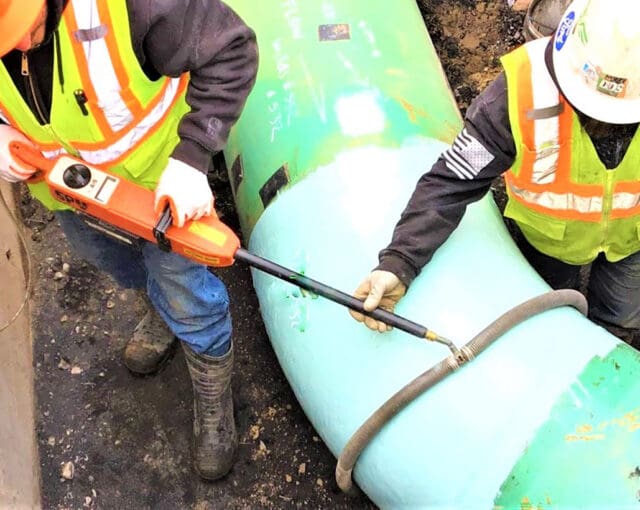
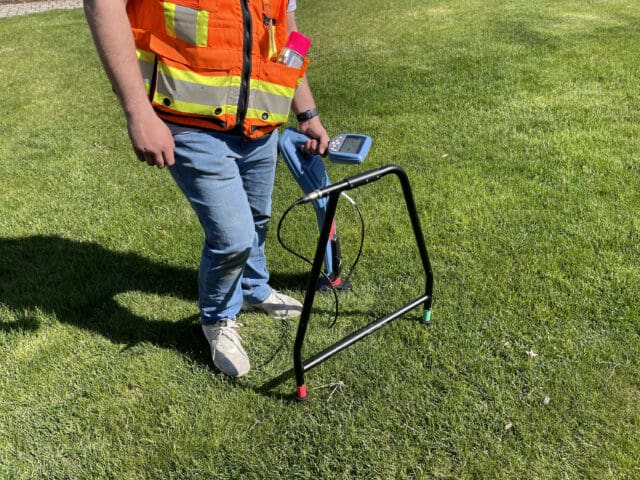
LaBella implemented a multifaceted inspection strategy, with each technique selected and executed in accordance with NACE and Pipeline and Hazardous Materials Safety Administration (PHMSA) standards. An Alternating Current Voltage Gradient (ACVG) survey was conducted at intervals of less than 10 feet to identify coating anomalies by detecting voltage gradients in the soil. All anomalies were recorded using PCMx signal attenuation tools and an external submeter Global Positioning System (GPS).
A Direct Current Voltage Gradient (DCVG) survey was selectively to validate ACVG findings and assess the severity of coating defects. This method provided polarity and amplitude data to help classify anomalies. Alternating Current, Current Attenuation (ACCA) surveys involve using PCMx technology to measure signal attenuation and evaluate the overall pipeline’s coating quality.
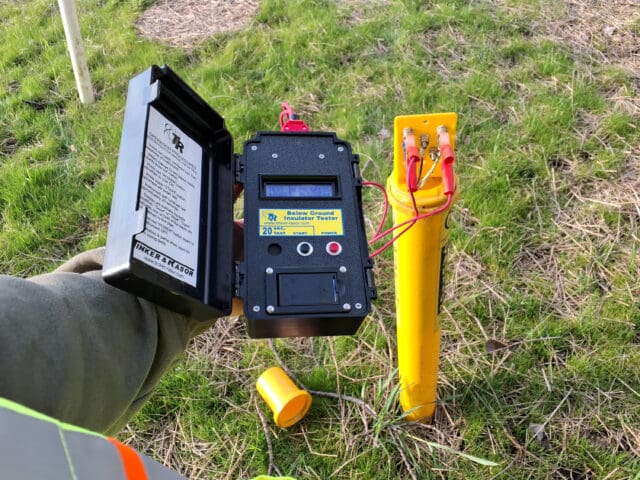
Corrosion Potential Measurements (CPM) were performed using Cu/CuSo4 reference electrodes and high-impedance voltmeters at intervals of between 1 to 6 feet. The data was evaluated against the NACE SP0169 cathodic protection criteria standard.
Phase III: Data Integration and Integrity Assessment
All field data—comprised of GPS coordinates, voltage gradients, attenuation rates, and corrosion potential—were compiled into a structured Microsoft Excel database. Using the data collected, LaBella complied reports to provide input on the correct actions needed. The final deliverables provided to the client included HCA-specific inspection summaries, severity rankings of detected anomalies, recommendations for direct examination or remedial actions, and updated alignment drawings and GIS-compatible data layers.