2025 Indirect Inspections – 115KV Conduit Lines
Protecting Communities Through Proactive Pipeline Assessment
A gas and electric utility client experiencing issues with its cathodic protection system engaged LaBella to diagnose two oil-filled electrical conduits. To assist the client, we performed a three-phase Indirect Assessment (IDI) on both conduits. LaBella’s objective throughout the process was to update system mapping, detect external corrosion threats and coating anomalies, and recommend non-intrusive remediation strategies.
Phase I: Preassessment
During this phase, LaBella used historical data and drawings to create an alignment in AutoCAD. Using GIS, the alignment and features (valves, test stations, line markers, etc.) were uploaded and used by the field team to validate the desk-top review. At the same time, we coordinated with the utility company, affected customers, state and local agencies to obtain all necessary access approvals. The preassessment was also used to determine access routes, hook-up points, and any potential obstructions that could potentially cause issues during the survey.
Phase II: Indirect Inspection Surveys
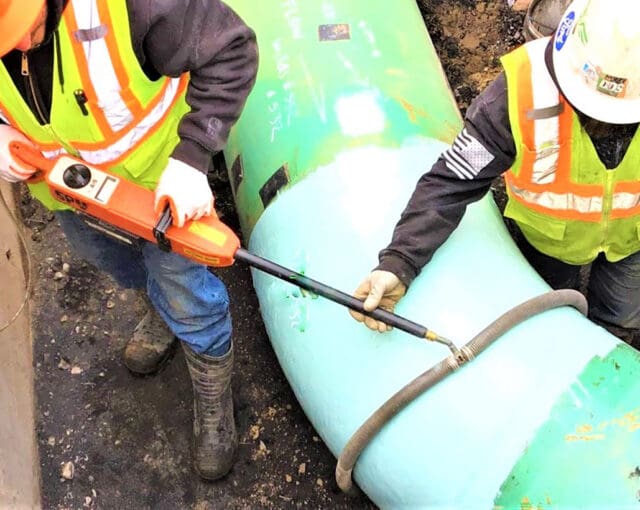
LaBella’s multifaceted inspection strategy included the following methods:
- Using our locator and GPS, we updated conduit locations, placed survey flags at 100-ft intervals, and recorded bends, valves, and other features for CAD alignment.
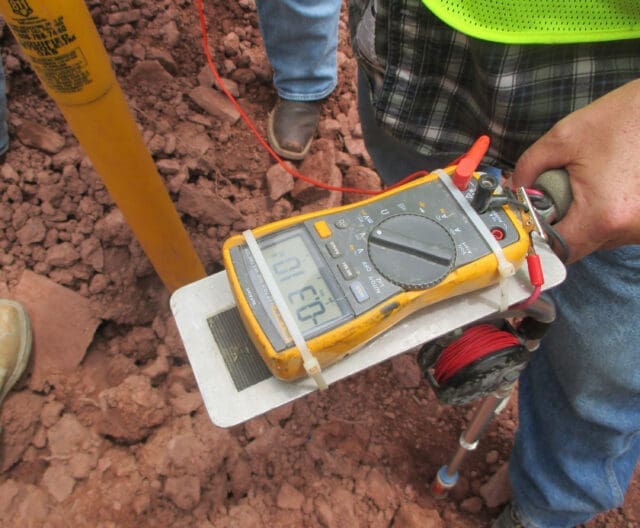
- To assess the conduit’s health without excavation, we performed both Alternating Current Voltage Gradient (ACVG) and Alternating Current, Current Attenuation (ACCA) surveys using PCMx and an A-Frame to record values indicating coating anomalies and voltage variations. Recordings of ACVG were taken at intervals of less than 10 feet with the PCMx and GPS whenever an anomaly was detected, and the ACCA was recorded at the 100-foot survey flags.
- A Direct Current Voltage Gradient (DCVG) survey was then used to validate ACVG findings and assist with classifying the severity of the defects.
- Finally, we performed a Close Interval Survey (CIS) at 1–4 feet in both the ON and OFF states to record the conduit’s current cathodic protection level.
Phase III: Data Integration and Integrity Assessment
We compiled all field data, assigned stationing valves to each recording, and completed the necessary calculations to draft a final report. The final deliverable included all findings, severity levels of the anomalies, updated maps, and remediation plans.