An Emergency Response
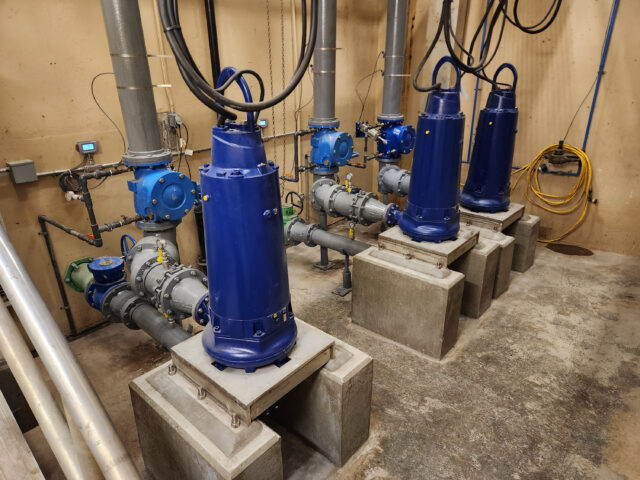
The Village immediately engaged LaBella to provide engineering support for emergency response and service restoration. LaBella developed and rapidly implemented an emergency pumping system designed to transfer water directly from the diminished Pine Lake pool into the water treatment facility, effectively bypassing the gravity-fed mechanism upon which the system had historically relied. This temporary pumping solution was successfully deployed within hours, restoring potable water service to the Village and stabilizing conditions for subsequent permanent interventions.


Re-evaluating Resiliency
Following the restoration of service, LaBella conducted a detailed bathymetric survey of Pine Lake Reservoir to quantify the remaining raw water volume and evaluate long-term storage resiliency under both average and drought-induced demand scenarios. The study established critical storage thresholds and identified the limitations of the existing system under future climate extremes.
Using this dataset as a foundation, LaBella, in partnership with the Village, the Washington County Health Department, and the New York State Department of Health, developed a comprehensive action plan to enhance operational reliability, extend asset life, and mitigate risk of future supply interruptions.

A Holistic Response
The comprehensive action plan includes several integrated components:
- Deployment of SCADA upgrades, real-time water level and flow sensors, and remote terminal units at Pine Lake and Skene Tank to support predictive management and early warning capability.
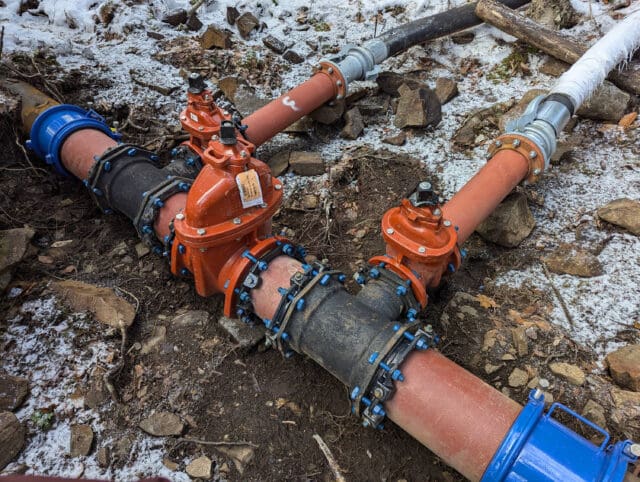
- Rehabilitation of raw water transmission mains; inspection and replacement of altitude valves, hatches, and vents; and incorporation of permanent bypass and emergency pumping connections to maintain continuity during failure events.
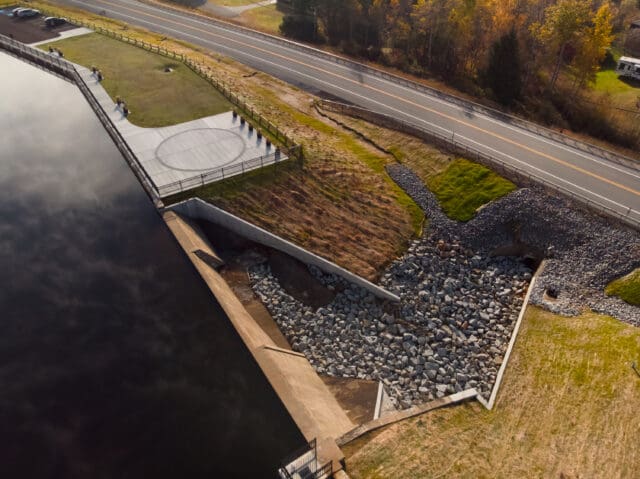
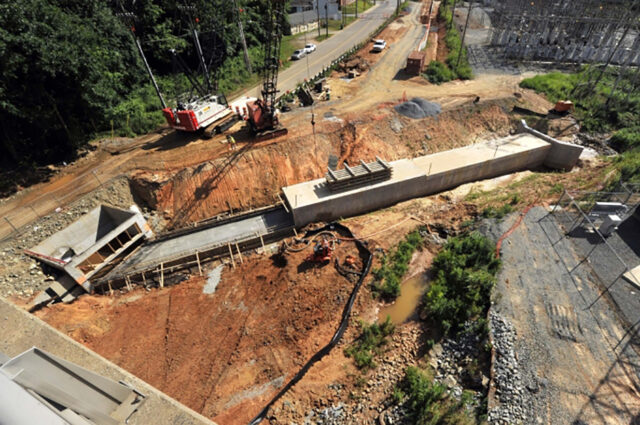
- Structural rehabilitation of Pine Lake and Midway Pond dam structures to ensure compliance with regulatory standards, extend service life, and reduce safety risks.
- Integration of CCTV inspection programs, continuous operational data collection, and predictive analytics to support condition-based decision-making and capital planning.
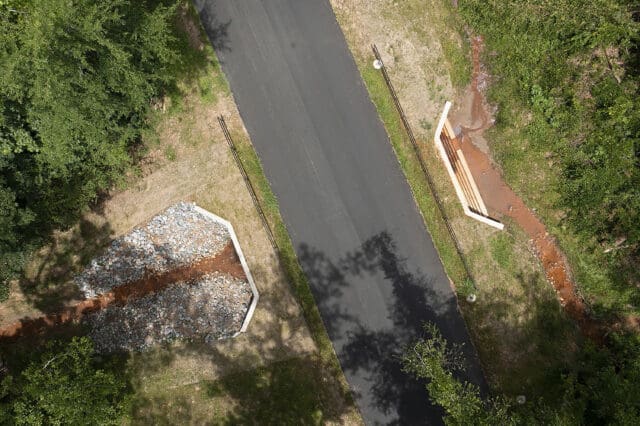
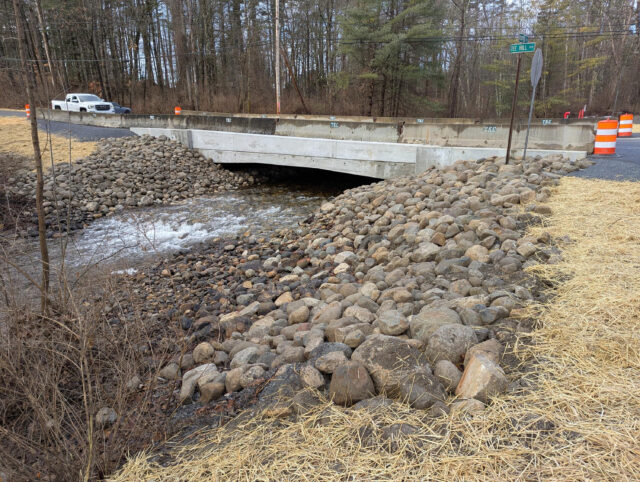
- Reconstruction of Long Pond Road, replacement of undersized culverts, and mitigation of tree hazards to preserve secure and continuous access to critical water system infrastructure.