Pipeline Integrity Management & Inspection Services
Talk to a LaBella Expert

Industry Expertise
LaBella is uniquely qualified to help utility operators meet the challenges they face. With growing regulatory mandates and the need for expert-level integrity and corrosion assessments, our team ensures compliance with PHMSA Gas Transmission Final Rule (Mega Rule) regulations, Integrity Management Plan 16 NYCRR Part 255, Federal DOT Part 192 Subpart O, and industry standards such as NACE (National Association of Corrosion Engineers) Standards and Guidelines.
Certifications:
Cathodic Protection
- AMPP CP 1- through Specialist (CP4)
Coating Inspection
- AMPP CIP Levels 1, 2, and 3
- Protective Coatings Specialist (PCS)
Welding Inspection
- AWS CWI
Pipeline Inspection
- API RP 1172
Qualifications:
- Subject Matter Experts: Specialized knowledge in protective coating, welding, and cathodic protection.
- NGA Operator Qualification (OQ) Program
- GTI Training: Collaborative instruction with federal and state government agencies, national laboratories, and gas and electric utilities.


Precision Data. Safer Pipelines.
Construction, Integrity Management & Engineering Services
Expert-level assessments that drive integrity decisions.Integrity Management & Risk Assessment
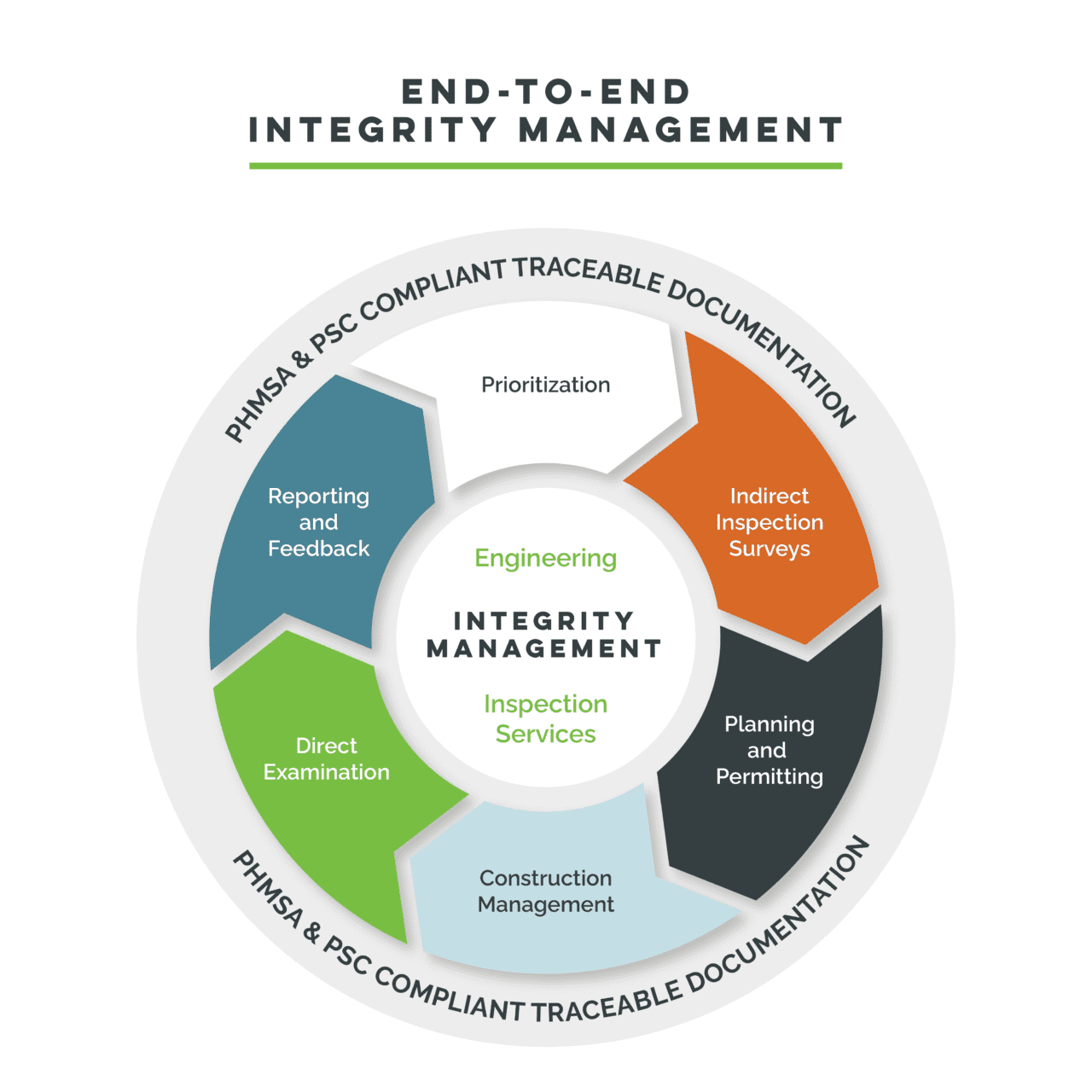
The initial phases of the pipeline integrity process focus on establishing a strong foundation for effective Risk Assessment. Collecting and integrating historical pipeline data enables the team to determine appropriate and compliant survey methods. We identify potential threats, ensure that all assessments meet industry standards, and coordinate required permitting to maintain regulatory compliance.
Corrosion Survey & Asset Evaluation
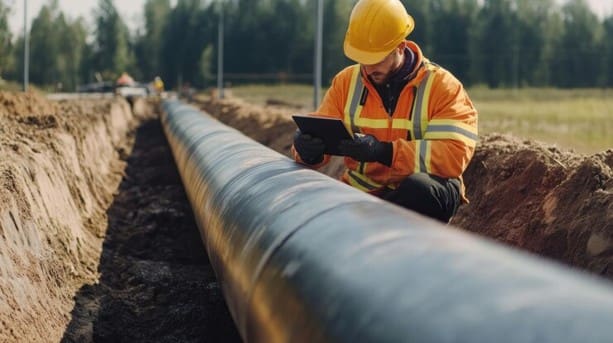
LaBella combines advanced assessment technology with field investigations to locate underground infrastructure and ensure safe, targeted inspections.
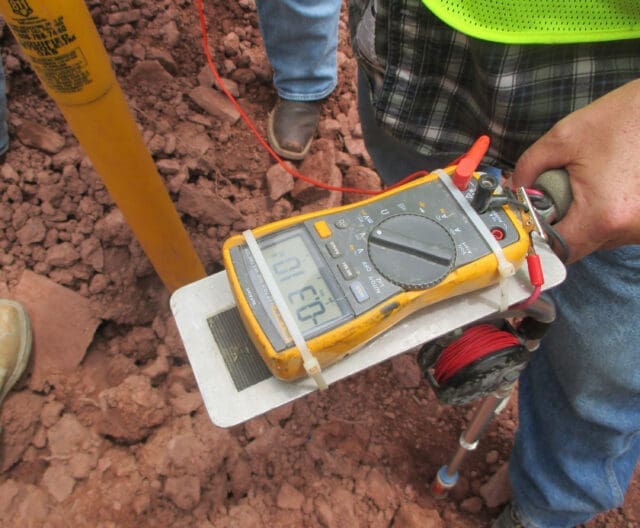
Indirect Inspection (IDI) methods, such as CIS, ACVG, ACCA, and DCVG, detects coating defects that help us assess cathodic protection and identify corrosion-prone areas.
Additional diagnostics, such as PCM, AC Current Attenuation (ACCA), and soil resistivity testing, help identify corrosive conditions. In-Line Inspection (ILI) projects help us find mechanical anomalies, including deformation and metal loss.
Survey results contribute to a Fitness for Purpose (FFP) evaluation, enabling assessment of the Cathodic Protection (CP) system and guiding pipeline health decisions.
Direct Examination
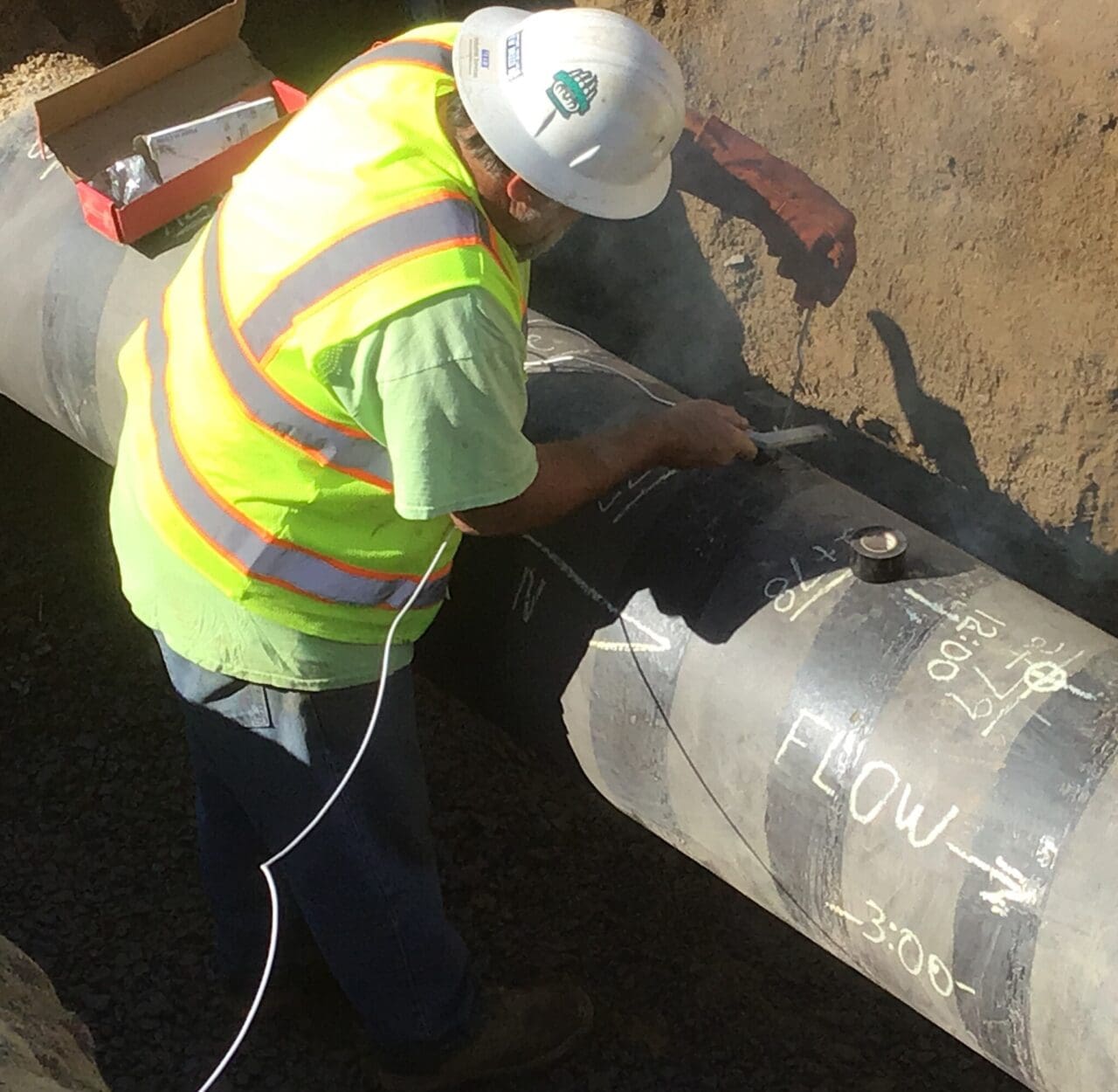
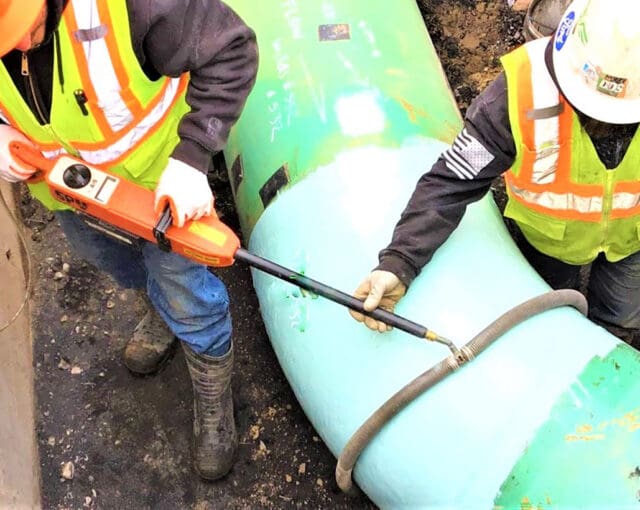
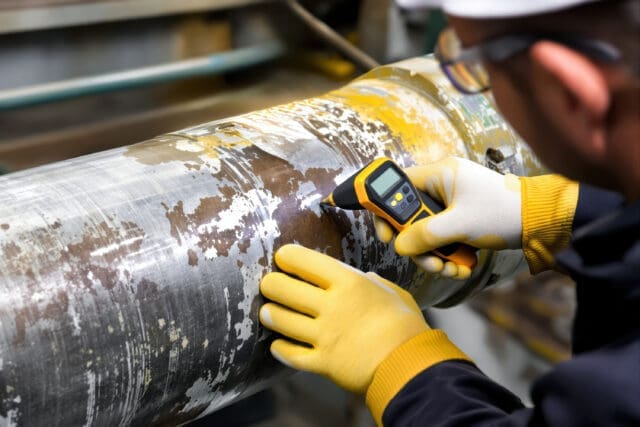
Our experienced pipeline inspectors use advanced non-destructive instruments to perform direct examinations to confirm and characterize anomalies. Our approach includes External Corrosion Direct Assessment (ECDA) with damage assessments of exposed pipes for weld defects, coatings, and mechanical issues.
NDE tools like Ultrasonic Testing (UTT), Phased Array UT (PAUT), and X-ray Testing (RT), Liquid Penetrant Testing (PT), and Magnetic Particle Testing (MT) identify and measure flaws, providing a comprehensive, data-driven assessment to guide pipeline repairs.
Project Management & Construction Management
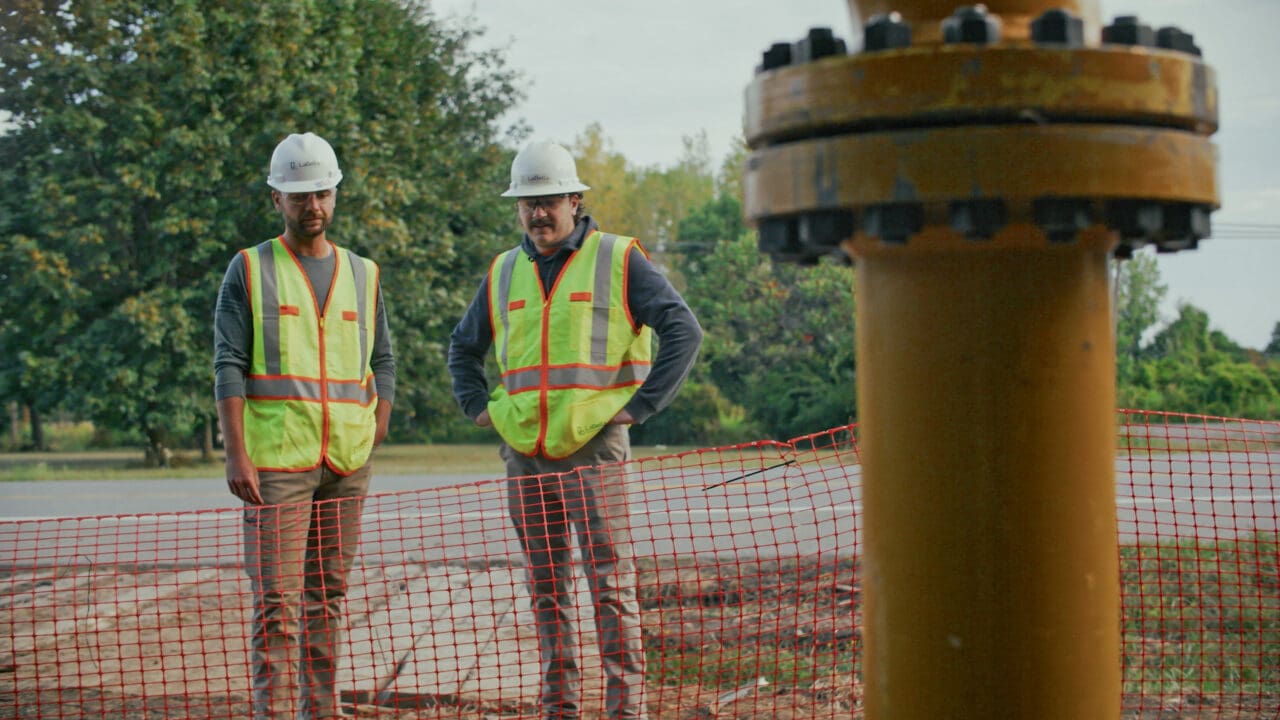
LaBella’s dedicated Project Management and Field Construction Management (FCM) teams ensure that all field activities are executed efficiently, safely, and in accordance with regulatory standards.
Certified Welding Inspectors (CWI) perform visual testing inspections to verify weld quality and ensure long‑term structural performance, while robust QA/QC processes maintain standards throughout construction.
Accurate record keeping strengthens traceability and compliance. Comprehensive, post‑construction turnover and as‑built services provide owners with complete, verified documentation for ongoing integrity management. These services create a streamlined workflow that reduces risk, enhances quality, and supports pipeline asset health.