

Protecting the Community: Responding to Crisis and Rebuilding for the Future
CR 26 Bridge Emergency Response
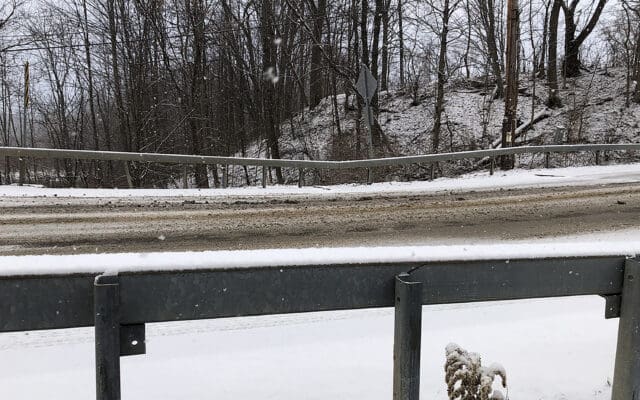
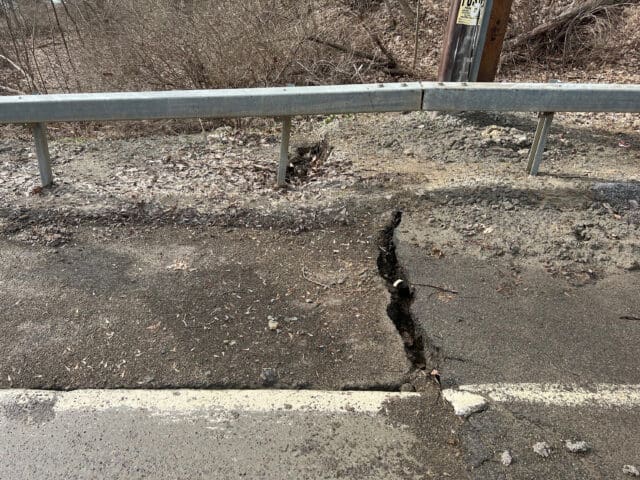
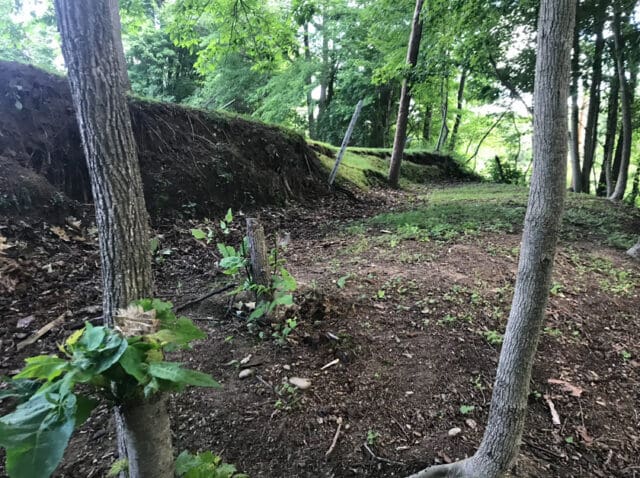 In January 2022, monitoring revealed that the bridge’s west abutment was settling and tilting, despite being founded on 12-inch prestressed concrete piles. The County reported these conditions to NYSDOT, restricted the bridge to vehicles under 12 tons to limit heavy loading, and engaged LaBella to conduct a preliminary geotechnical evaluation of the west riverbank while continuing to monitor abutment movement.
Conditions escalated in February 2022, when a large crack formed across the roadway and nearly nine inches of abutment settlement was recorded. Recognizing the danger to the traveling public, LaBella advised the County to close the bridge immediately. The sudden closure disrupted daily life across the community, creating substantial detours for commuter and business traffic, altering school transportation plans, and affecting emergency service routes. With only three other river crossings north of Interstate 86, restoring this connection became a top priority for the County.
Following the closure, our team investigated the cause of the abutment displacement and slope failure through soil borings and a preliminary slope stability evaluation. These investigations identified a thin, slippery clay layer beneath the bridge that had become active nearly 50 years after construction, triggering soil creep and damaging the piles. Based on these findings and six months of west abutment displacement monitoring, we concluded the west abutment piles had fractured and could no longer support the bridge, rendering it unstable and posing an imminent risk to public safety.
The County and NYSDOT determined the bridge should be removed to prevent potential safety and environmental hazards in the event of a collapse. Under an emergency response declaration, the project proceeded in two phases: removal of the unsafe structure, followed by the design and construction of a permanent replacement.
Photos: West approach settlement (top right), roadway crack formation (middle right), and west riverbank slope failure (bottom right).
Phase 1: Bridge Removal
By January 2023, monitoring confirmed that the west abutment of the CR 26 Bridge had displaced nearly 18 inches and settled more than 12 inches, verifying extensive structural failure and slope instability along the west riverbank. With the bridge closed to traffic, Allegany County DPW began Phase 1, removing the existing structure amid challenging geotechnical conditions.
A temporary shoring system was designed to limit loading on the weakened abutment, enabling the use of conventional bridge removal methods. The deck was removed from atop the bridge to minimize in-water disturbance, and a modular containment system was used to capture debris and prevent concrete from entering the Genesee River. Steel girders were carefully lowered in a controlled sequence, followed by removal of the remaining bridge superstructure components.
In-stream work was timed to avoid impacts on freshwater species during sensitive ecological periods, and the staging area was limited to reduce site disturbance. Silt fencing, jute mesh, and other erosion controls were implemented to stabilize the riverbank throughout the process. Following bridge removal, these measures were maintained to stabilize the site until reconstruction began. LaBella continued monitoring the west riverbank for any changes and coordinated with the County, NYSDOT, and FHWA to ensure compliance with technical and environmental requirements. Bridge removal was completed in April 2023.
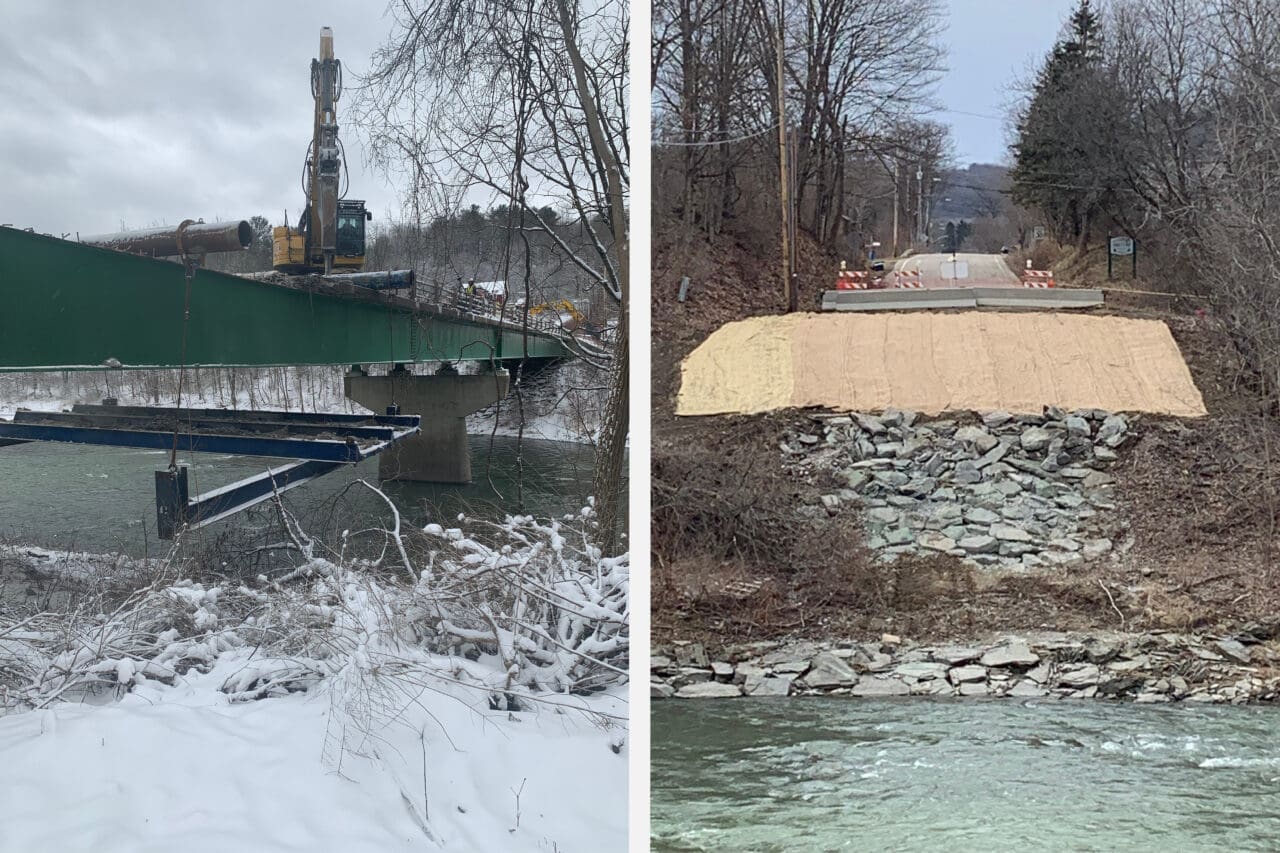
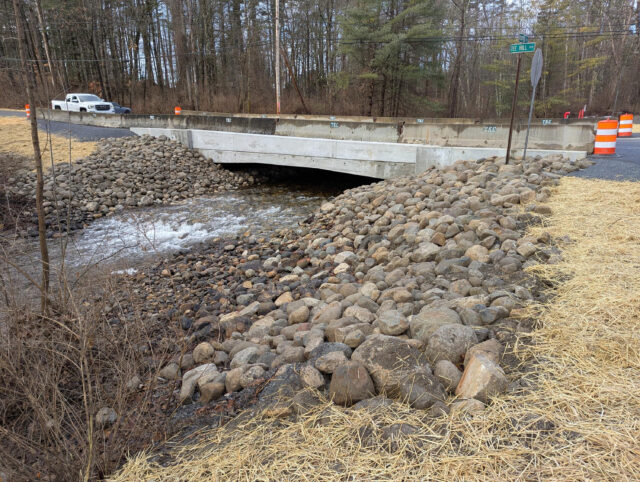
Photos: A modular containment system was used to prevent concrete and debris from entering the Genesee River during bridge deck removal (left). The west abutment site cleared and ready for the replacement bridge (right).
Phase 2: Bridge Reconstruction
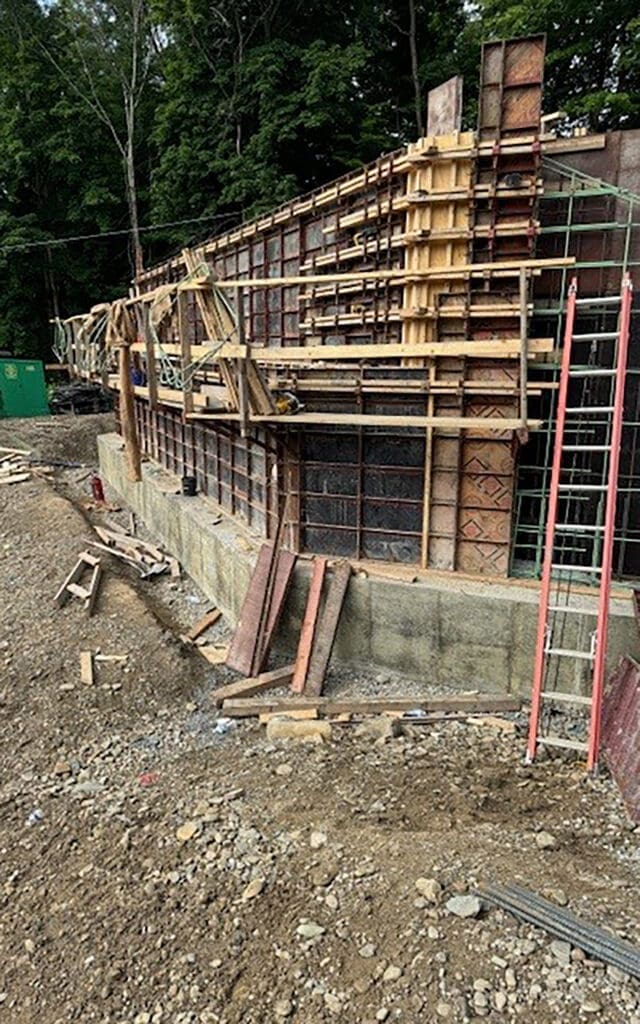
 Following removal of the existing structure, Allegany County DPW advanced Phase 2 to design and construct a permanent replacement bridge, restoring the vital river crossing.
LaBella served as the design consultant, providing structural, hydraulic, and geotechnical engineering services to deliver a resilient, long-term solution. Our team conducted structural studies to evaluate bridge types, performed a detailed hydraulic analysis of the Genesee River, and led an extensive geotechnical investigation of the west riverbank, where the original slope failure occurred.
Geotechnical analysis revealed clear evidence of slope instability along the west riverbank, including a failure scarp behind the west abutment, slight bulging of the heavy stone fill beneath it, and cracked precast concrete piles. Additional soil borings and slope stability modeling, calibrated to observed failures and high groundwater conditions, confirmed that the slope failure was triggered by a rapid drawdown event in the Genesee River.
With the failure condition identified, our team implemented design strategies to secure the slope and isolate the new bridge foundations from the adjacent slope failure zone. The bridge was lengthened so the new abutment could be set back from the unstable slope, and the riverbank was regraded to improve stability. Pile-supported abutments were extended well beyond the unstable slope, with front piles angled to resist lateral forces. Steel-cased, cast-in-place piles were used in place of the prestressed concrete piles from the original bridge, providing greater strength and durability. By isolating the foundations from the unstable riverbank slope, the design eliminated the risk of future movement at the abutment and increased both the bridge’s load-carrying capacity and hydraulic performance.
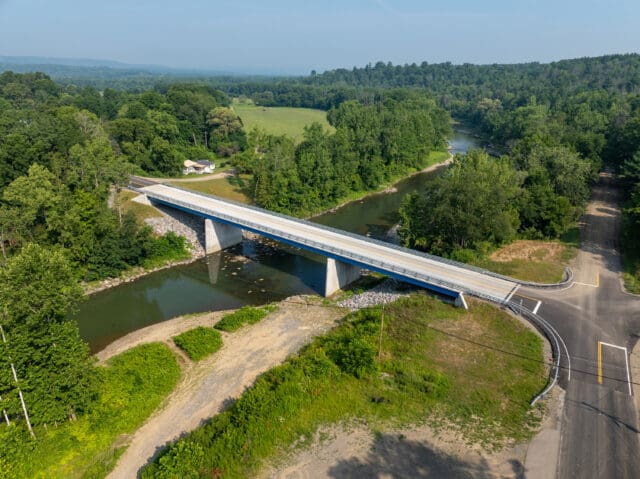
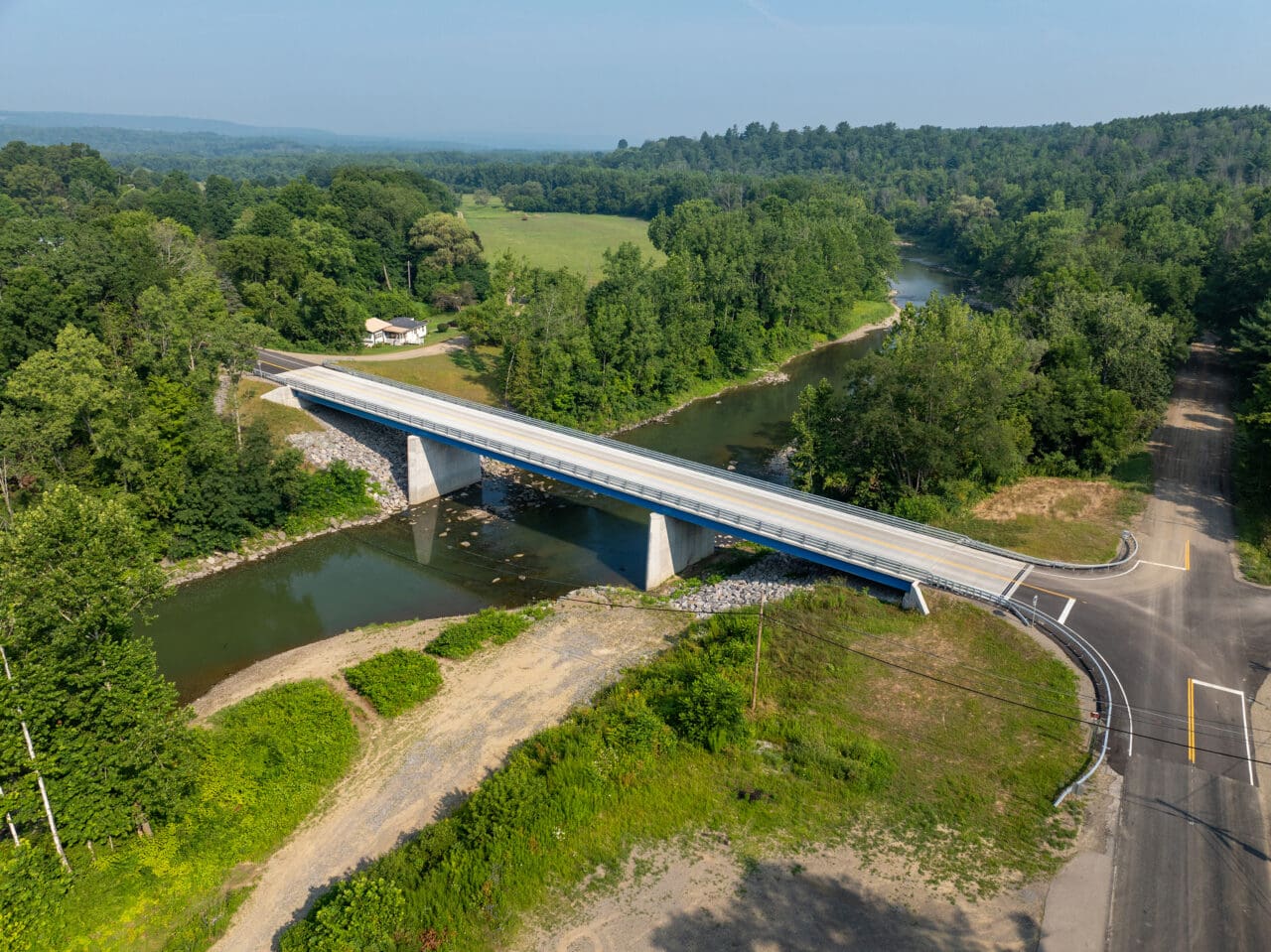
With the slope stabilized and the foundations secured, we evaluated multiple bridge types. A three-span steel multi-girder bridge was selected to eliminate the need for a central pier, improve hydraulic performance, and minimize environmental impacts. The 326-foot-long replacement bridge features a composite concrete deck, reinforced concrete abutments, and maintenance-friendly design elements to simplify future repairs and minimize service disruptions.
Construction of the replacement bridge faced multiple high-water events on the Genesee River, which were managed using sheet pile cofferdams to protect active work zones and minimize environmental impacts. LaBella provided construction inspection services, including field inspections, materials testing, shop drawing review, and coordination with the County and NYSDOT to ensure the bridge met design specifications and quality standards. Construction of the replacement bridge was completed in June 2025.
Photos: West abutment during construction (top right) and completed (bottom right).
An Award-Winning Project
CR 26 Bridge Replacement Project Celebrated With an APWA NY Chapter Public Works Project of the Year Award
In March 2026, LaBella and the Allegany County Department of Public Works were honored to accept the 2025 Public Works Project of the Year Award in the Disaster or Emergency Construction/Repair $5-$25 Million category from the American Public Works Association (APWA) New York Chapter for the CR 26 Emergency Response and Bridge Replacement project.
The APWA Public Works Project of the Year Award was established to promote excellence in the management, administration, and implementation of public works projects by recognizing the alliance between the managing agency, the consultant, and the contractor.

An Award-Winning Project
CR 26 Bridge Replacement Project Named Public Works Project of the Year by APWA NY Chapter – WNY Branch
In February 2026, LaBella and the Allegany County Department of Public Works were honored to accept the 2025 Public Works Project of the Year Award in the Disaster or Emergency Construction/Repair $5-$25 Million category from the American Public Works Association (APWA) New York Chapter – Western New York Branch.
The APWA Public Works Project of the Year Award was established to promote excellence in the management, administration, and implementation of public works projects by recognizing the alliance between the managing agency, the consultant, and the contractor.