Designing the Heart of the School: Considerations for a Modern Cafeteria
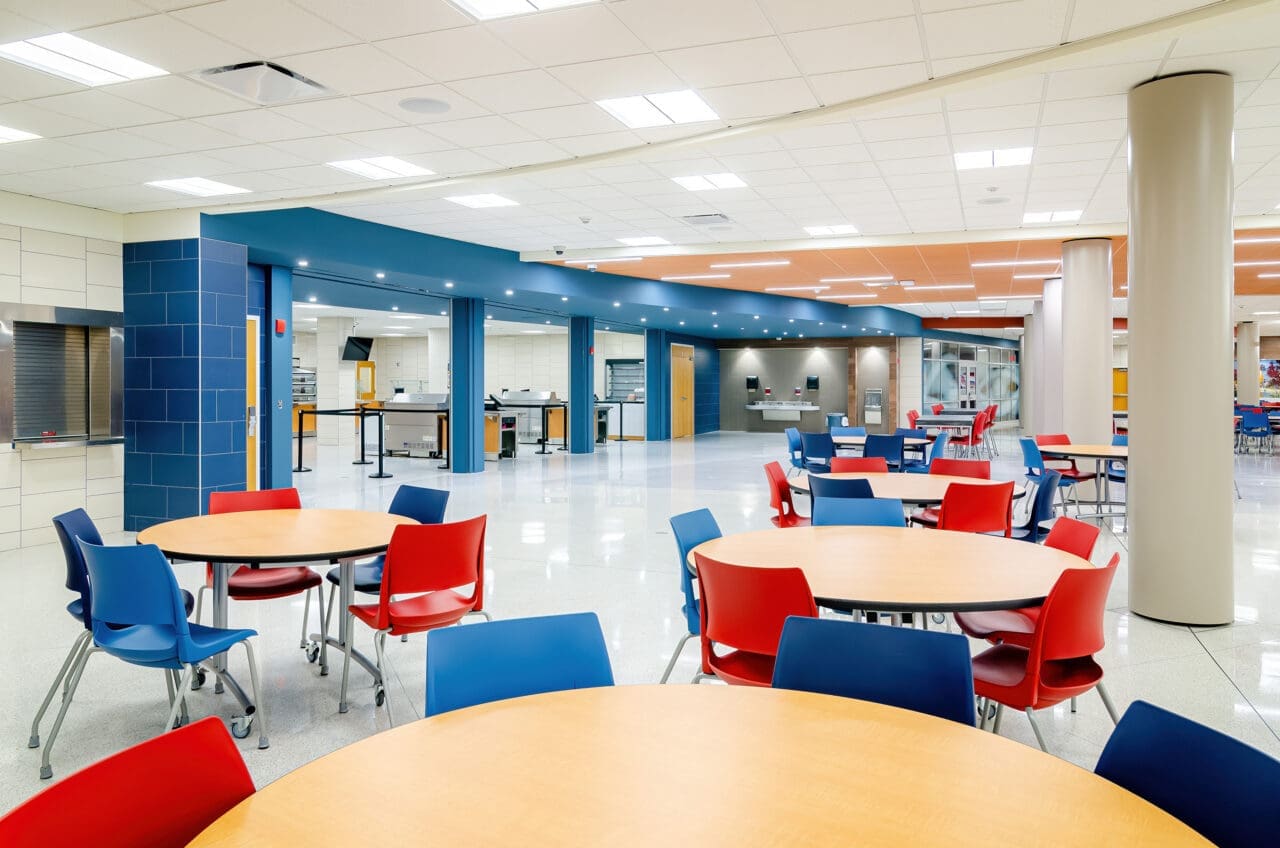
It’s often said the kitchen is the heart of the home for the sense of gathering it provides. The same can be true of a school cafeteria. Thoughtful design—from prep spaces and serving lines to seating and multipurpose areas—can create environments where students, staff, and the community gather and connect.


In this interview, we sought insight from two experts who have extensive experience and valuable perspectives designing K-12 cafeteria projects. Mark Barrett is a Project Manager at Fetech, Inc., a food facility design consulting firm in Central New York. Stacy Welch is an Architect and Associate Vice President at LaBella Associates with more than 14 years of experience.
Below, we explore how we create functional, inviting kitchen and gathering spaces that support districts and their students’ needs.
How has K–12 foodservice changed over the last decade?
Stacy Welch: Several changes have occurred over the past decade, many in response to changing regulations and requirements for serving students. Recently, there has been a lot of discussion about whether to use disposable or reusable trays. Many districts have switched to disposable trays, which has changed the flow of dishwashing within the kitchen space and provided opportunities to redesign kitchen layouts.
Additionally, many districts in New York State are now offering free breakfast and lunch programs to all students, and we’re seeing more students using these programs. The result is that cafeteria staff need to prepare larger quantities of food, which affects how districts format their cafeterias and how the students interact with them. In several recent renovation projects, districts have reported the need to use the cafeteria starting at 6:00 a.m., with continuous use and production until 3:00 p.m. There is a constant cycle of prepping and serving meals, creating a need for more food storage and equipment space.
Mark Barrett: To build on what Stacy said, yes, there have been changes related to food preparation and storage needs. There has been a shift from preparing lunches in-house from scratch to more of a cook-and-serve model. A lot of this relates to the need to produce larger quantities of food than before. To create spaces that support increased production and additional storage for prepared foods, we often incorporate combi ovens—multipurpose appliances that combine convection, steam, and combination cooking modes—freeing up space for hot and cold food storage. We are also reducing long-term prep areas in favor of adding more quick prep areas.
Is there an ideal location for a cafeteria within the school?
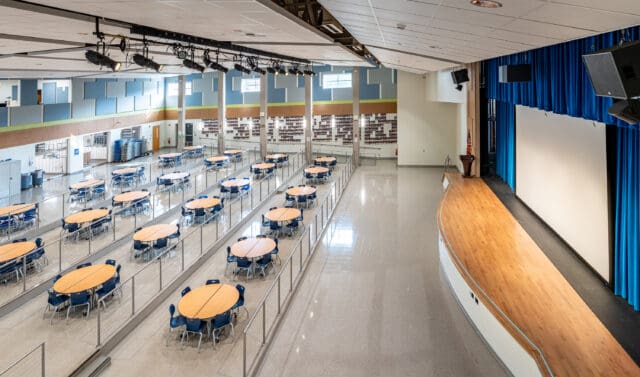
Stacy: Most cafeterias end up being close to the entrance, particularly in the case of cafetoriums, which are combination cafeteria/auditoriums. Placing them near the main entrance allows the public to enter the space directly without passing through instructional spaces, helping maintain security.
Mark: Ideally, the kitchen will have an egress route directly outside as well, not only for deliveries but also to provide easier access to dumpsters for the custodial team.
What are some design considerations when determining the cafeteria layout?
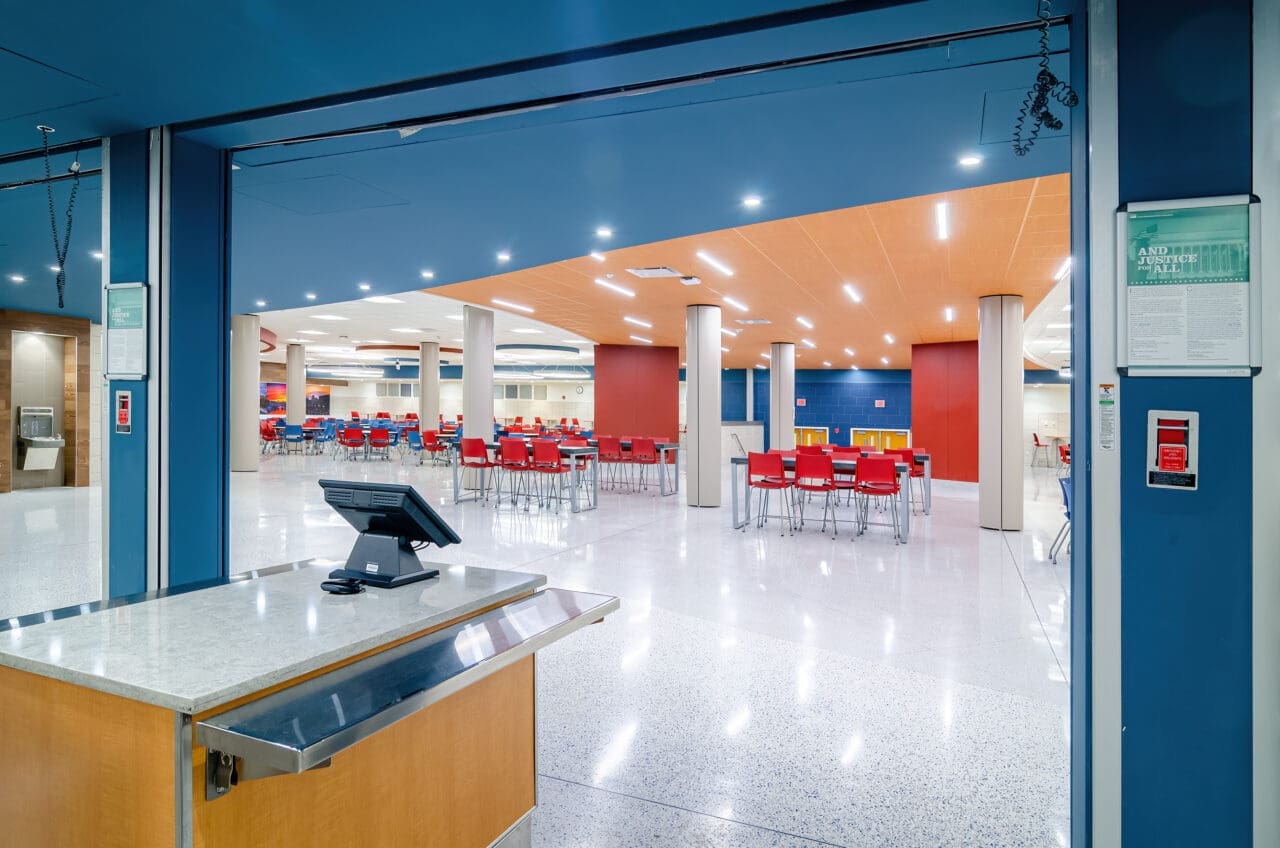
Stacy: One of the primary decisions is where to place the serving line(s) versus the seating area. Should students enter the cafeteria first, then move to the serving line? Or should they go directly from the corridor into the serving line before heading to their seats? This is where age considerations come into play.
In elementary schools, students are typically directed straight into the serving line to minimize distractions and keep the process efficient. However, in middle and high schools, students tend to prefer more flexibility. In these spaces, we may create a layout that allows students to enter the cafeteria, put their belongings down, socialize briefly, and then join the serving line when they’re ready or when lines are shorter. This approach provides a greater sense of independence and choice in how they move through the space.
Another trend we’re seeing in high schools is increased interest in a college dining hall experience, with an open concept and multiple food stations instead of a single serving line.
Mark: I like to call it a scattered type serving where you have multiple stations—pizza, sandwiches, a salad bar, traditional lunch-style menus—in different parts of the serving area. The placement of the different food serving areas must be strategic and, ideally, should alleviate congestion by allowing students to go to different areas instead of forming one line.
Who are the typical stakeholders involved in the decision-making process?
Mark: Typically, we take a collaborative approach involving multiple stakeholders, including the superintendent and principals, the foodservice director and cafeteria staff, and faculty who regularly use the space. We also like to engage students as the primary users of the cafeteria, particularly at the high school level, where we want them to feel actively engaged in the decision-making process. This helps us understand what they want to see and how they prefer to move through the space. Their feedback can influence design decisions, including the balance between traditional lunch lines and grab-and-go meals for those who prefer not to wait in line. Ultimately, it’s a collaborative effort with everyone to meet the needs of the school community.
Stacy: Including teachers, especially at the elementary level, can also be beneficial. As the individuals responsible for guiding students through the serving line, they can offer valuable insight into how students move through the line and into the cafeteria for both drop-off and pick-up.
Do the different serving trends like heat-and-serve or farm-to-table affect kitchen layout?
Mark: In a heat-and-serve model, you don’t need most prep equipment, like slicers, mixers, and food processors. Many times, in heat-and-serve kitchens, food is either brought in hot and stored in heated cabinets or brought in cold, stored in a walk-in cooler, reheated in a combi oven, and placed on a serving line. With farm-to-table models, you need more prep space in the kitchen. We’re seeing more school districts going in that direction because of the health benefits for students, as well as the funding provided by the state to support local farms.
Should the kitchen/serving area and cafeteria seating area be visible to each other?
Stacy: Ideally, you would have a visual connection between the serving line and the cafeteria so that additional staff are able to observe the cafeteria. However, it is preferable to have a barrier between the cafeteria and the kitchen space itself. Cold storage equipment—like freezers—makes a lot of noise. Especially in the case of cafetoriums, we recommend the serving line be open to the cafeteria space but separated from the kitchen. It’s a case-by-case basis, but we are mindful of the transfer of noise from the kitchen equipment to the cafeteria space itself and how those spaces are being used at different times of day.
What furniture, finishes, and strategies are used to allow the cafeteria to be reconfigured for different audiences and uses?
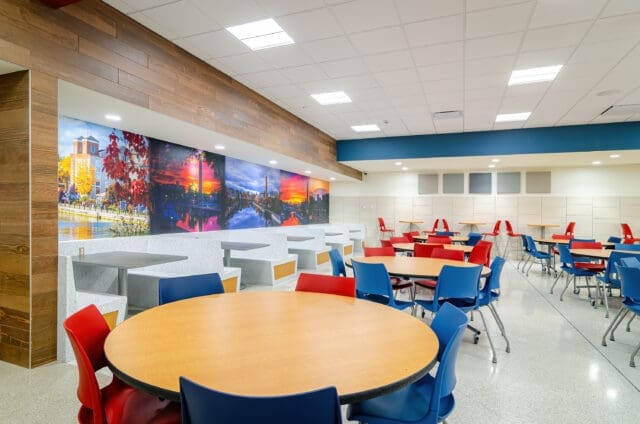 Stacy: The flexibility of furniture is important. In the past, it was very common for cafeterias to have seats and tables attached to each other so they could be cleaned easily and folded up quickly. In a space like a cafetorium, it’s important that seats and tables are not attached. Instead, foldable tables with rolling chairs that can be stacked for cleaning allow flexibility. All the tables can be taken away, while the chairs remain available for performances, allowing for higher occupancy.
Regarding materiality in the cafeteria, using wood tones is very biophilic. A lot of materials are available that are not only cleanable but also have a natural look. Sound is another important component to ensuring the space doesn’t feel overwhelming. Using acoustic materials like wall and ceiling panels and even certain flooring materials throughout the space can absorb sound and make the space feel less institutional and more welcoming.
What are some common maintenance issues or other inefficiencies that you see occur in a school kitchen?
Mark: There are several common challenges cafeterias face, including water quality, equipment maintenance, and kitchen layout. Many regions in New York State have hard water, which can cause limescale to build up and affect kitchen equipment like combi ovens, steamers, and dishwashers. Filtration systems can help to reduce the limescale buildup, but proper maintenance is still required. Logistics and layout play a major role in efficiency as well. It’s important to plan for deliveries, both daily food deliveries and long-term equipment replacement. Clear access to service-related items is key to keeping the kitchen operational, and that involves proper circulation paths throughout the whole area.
Do you see any future trends that might reshape the overall experience of the kitchen and cafeteria?
Mark: Farm-to-table is up and coming. It’s a great concept that supports communities by sourcing produce, and sometimes meat, locally. The school can also receive funding from New York State for supporting local farms. It’s a win-win for everyone—the students get locally produced meals made from scratch with fewer preservatives, and it’s better for the environment.
Stacy: I agree with Mark’s comment about farm-to-table. I love the idea that more districts could take advantage of the benefits that this funding provides. In some cases, it’s going even further than sourcing from local farms. At Webster Central School District, they have a greenhouse where produce is grown and then used in their kitchens. It’s very full circle for students to see the ingredients grown on site and then later used for their meals.
While curriculums evolve from year to year, the need to nourish students remains constant, and the spaces that support it must evolve as well. As some of the most heavily used areas in any school, cafeterias, kitchens, and serving lines require ongoing modernization. Getting the design right isn’t just important—it’s an investment in the daily experience and well-being of students.