Treating School Walls as Opportunities, Not Barriers
When it comes to selecting wall finishes for a K–12 environment, the list of considerations is longer than the Friday before spring break. Cost and maintenance matter, but walls also contribute to acoustics, security, wayfinding, displays, fire safety, durability, and even how large or welcoming a space feels.
Once you’ve worked through your flooring selections, it’s time to look up and consider the walls shaping your school environment. Here are a few lessons we’ve learned.
Old-School Durability, New-School Design
If your school includes 1960s-era construction, there’s a good chance its corridors feature structural glazed tile (SGT), also called glazed block. These masonry units combined structure and finish in one exceptionally durable surface—often in era-defining shades of pink, mint green, or mustard yellow. Much of that SGT remains in good condition today, which may be impressive or frustrating, depending on how ready you are to leave the color behind.
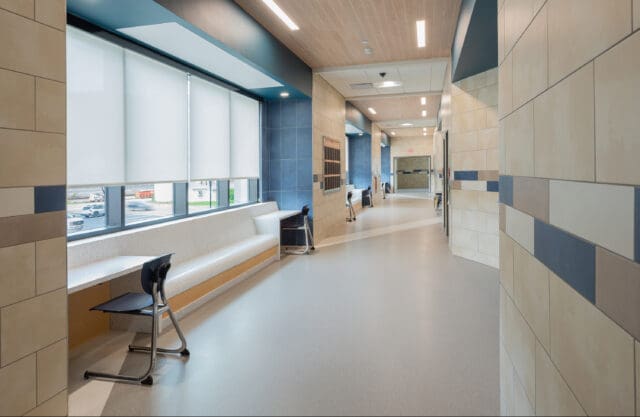 In today’s construction, corridors are more commonly metal framed and clad with porcelain or ceramic tile, which offers similar cleanability and abuse resistance as SGT, but with a much wider variety of visuals (including wood or natural stone looks) and sizes. With tiles available as large as 1 meter by 3 meters, designers can reduce hard-to-clean grout lines and create cleaner visuals in hallways without sacrificing durability.
Give Your Walls an Assignment
Corridor walls also represent opportunities to support more than just building circulation. A simple jog in the wall can create a space-efficient seating niche for students needing a moment outside the classroom, one-on-one discussions, or small group meetings. A writable surface on a small section can support these impromptu learning zones.
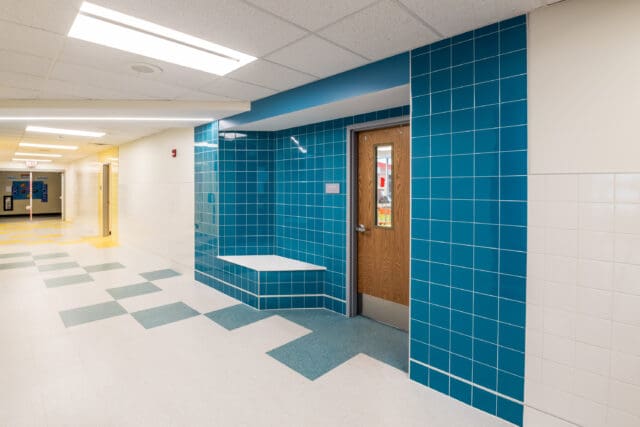 Purposeful niches at doorways can also support wayfinding. At Hilton Central School District, accent-colored tiles at each classroom door help each doorway feel distinct. Ledges give teachers a place to decorate to help younger students recognize their classroom.
Considering how the interior design will support display and messaging is critical—not only do taped-up flyers and projects look messy and damage finishes, but uncontrolled paper on the wall may also exceed fire code limits. Display cases are a common solution, and if you’re considering electronic displays and technology-based messaging systems, they can be recessed and protected appropriately when integrated into the architectural design. Strategically placed tack surfaces can help organize display efforts and offer acoustical benefits, as well.
Not Every Room Needs the Pep Rally
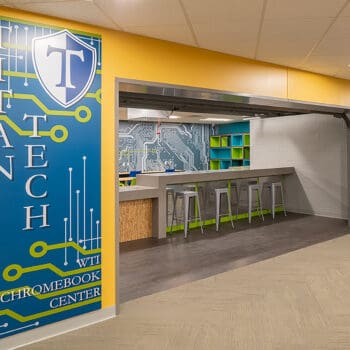
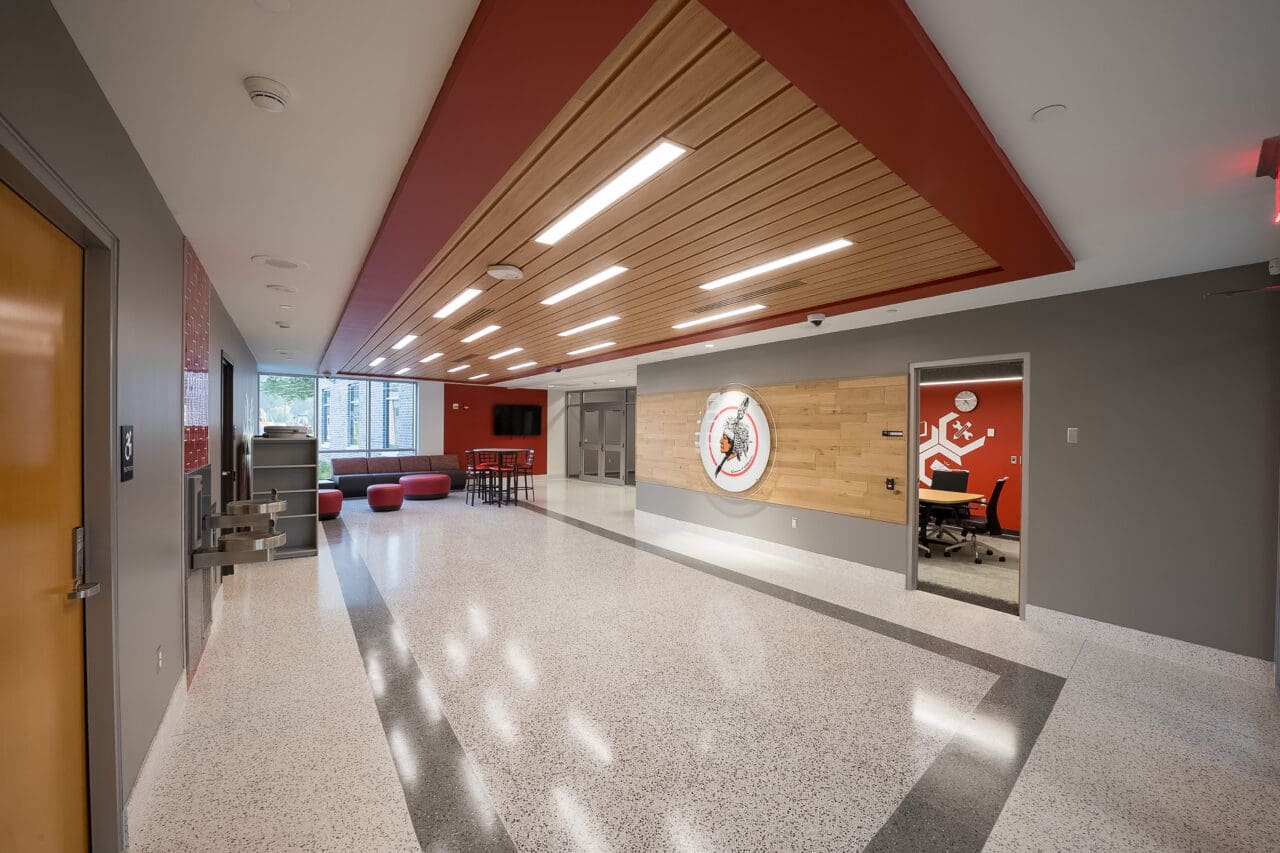
Digital printing is now available on a wide variety of substrates, including vinyl wall covering, porcelain, tack surfaces, window film, and more. The opportunities to use wall finishes to enhance your school pride are plentiful and affordable. We encourage you to consider using finishes to create a “sense of place” that is inspiring and customized to your district and values.
That said, part of your design discussion should include consideration of which spaces can and should be exciting and stimulating and which spaces would benefit from calm and focus. Most school colors tend to be highly saturated primary colors, chosen specifically to grab the eye and convey excitement in athletic contexts. They can be the foundation for your school’s color palette but may not be appropriate for all spaces. Classrooms, in particular, often benefit from lower stimulus wall finishes, so we typically recommend developing a broader palette of colors that works with your school’s brand colors but also includes neutrals and secondary colors for quieter learning environments.
Open Up the Possibilities
As the design process proceeds, early-phase single-line diagrams start to turn into floor plans with walls, doors, and windows. Long before we start talking about colors and finishes, it’s worth taking a step back and considering—is it a traditional wall?
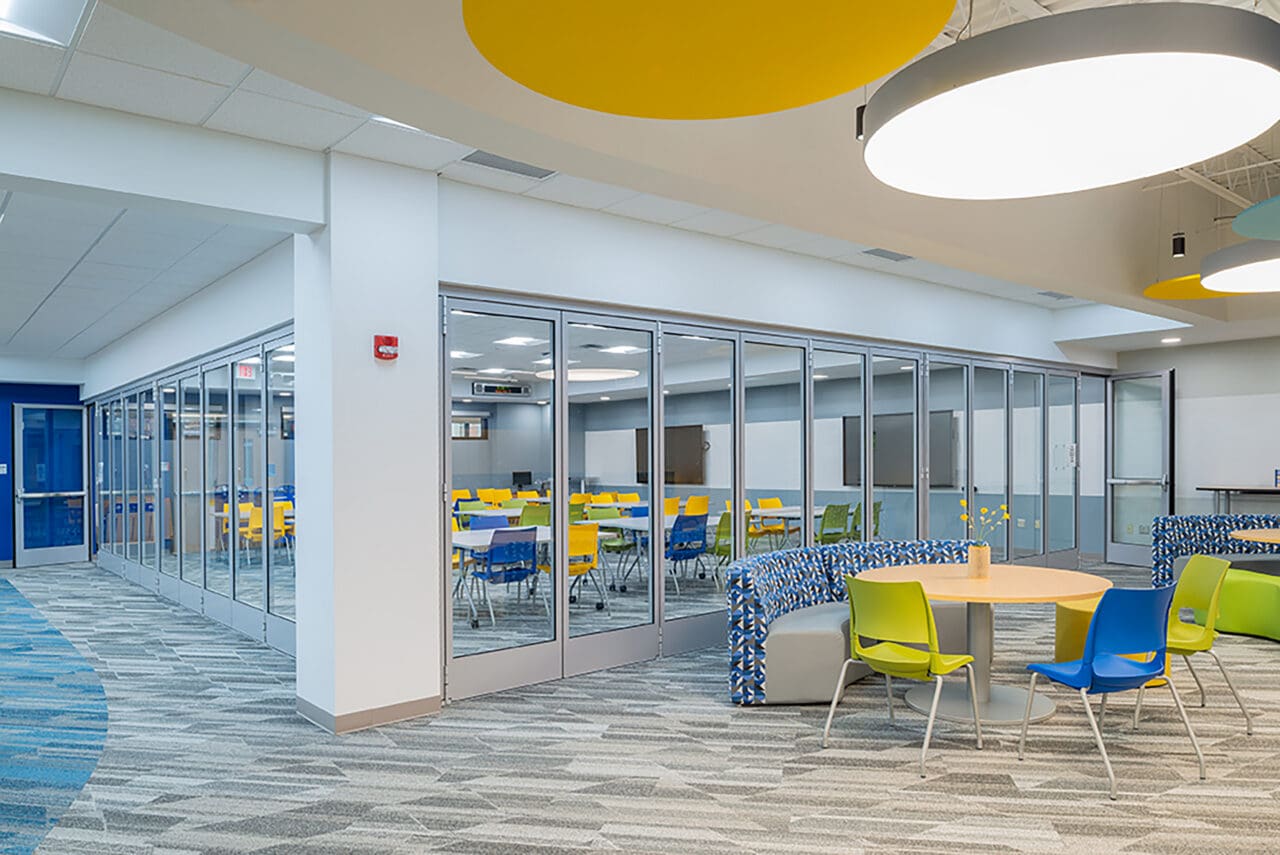
School security is not always about creating harder or more opaque separations. In many settings, visibility between spaces can support passive supervision and a greater sense of connection. Interior glazing and clerestory windows can share daylight between rooms, while patterned or strategically placed window film can balance light with privacy and distraction control.
Strategically placed glass also allows glimpses of learning in action, which especially benefits Career and Technical Education or other non-traditional courses.
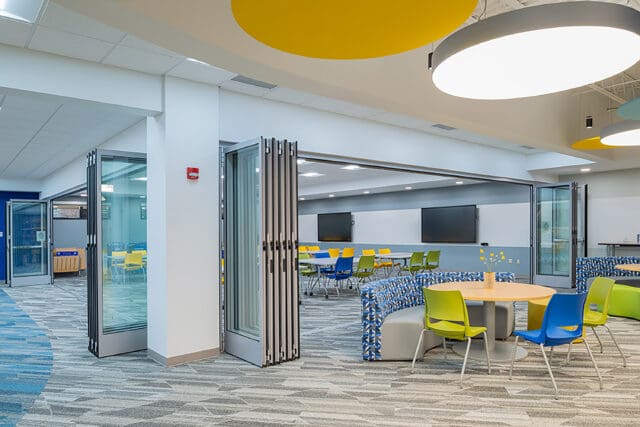
Movable walls can help when one area must support several room configurations. Today’s operable partitions offer improved ease of use, technology integration, and code-compliant options. Although they cost significantly more than conventional walls, they may provide value when they allow the same square footage to pull double duty.
The Final Test: Does It Support Learning?
We are always doing our homework, and you should, too! We believe research should inform finish selection because seemingly small decisions can affect how well students see, hear, and engage with instruction. Acoustic wall treatments can improve speech intelligibility. Low-sheen finishes can reduce glare. Wall systems that help organize and reduce visual clutter can support focus and attention. High-contrast writing surfaces can improve visibility. Properly selected paint can withstand regular cleaning and support projection where needed.
Don’t hesitate to dive into the details with the design team. The right wall solution should do more than withstand daily school life: it should support communication, reinforce identity, simplify operations, and help every student engage with the learning environment.

About the Author